







Highlights
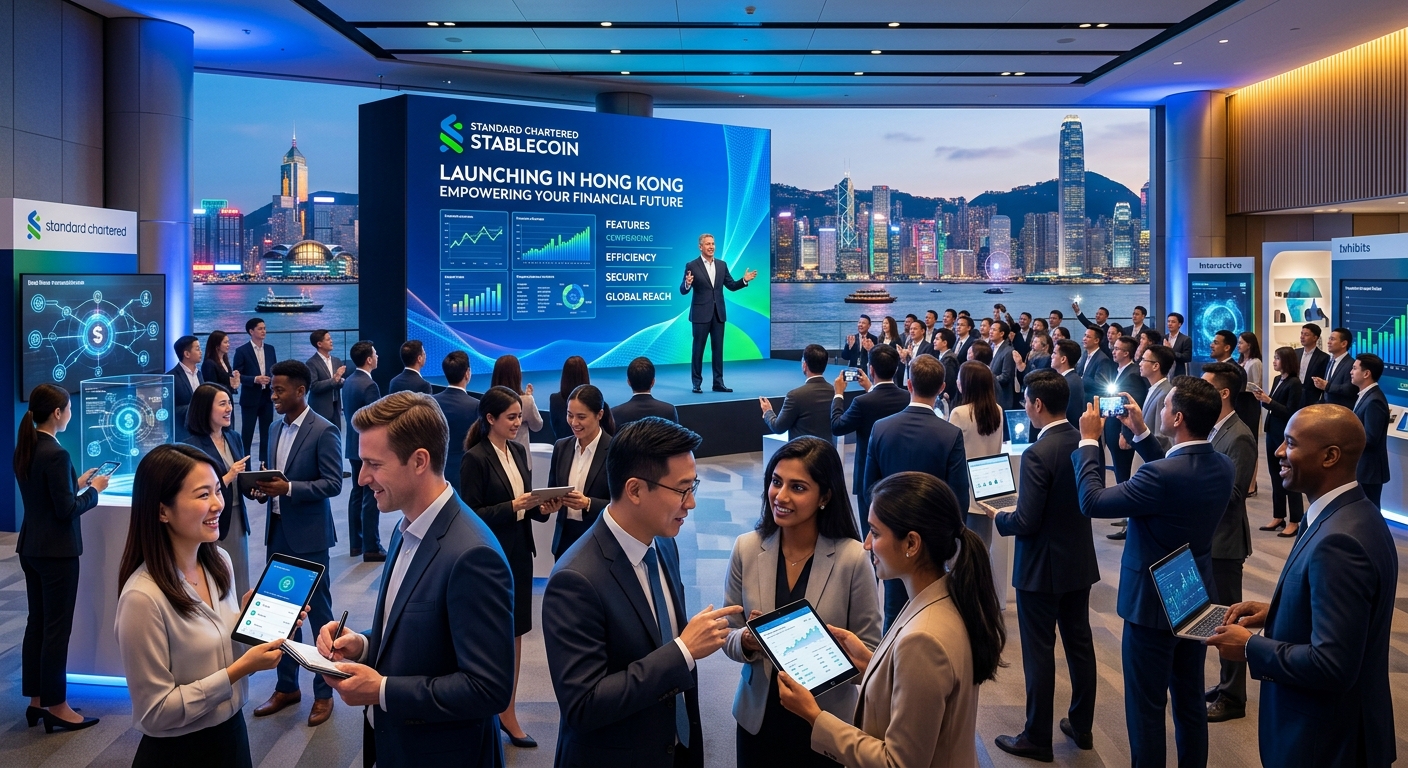
- Standard Chartered Bank (Hong Kong) becomes the first bank to distribute HKDAP, a Hong Kong dollar-backed stablecoin authorized by regulators.
- SCBHK plans to facilitate various financial operations, including tokenized fund settlements and cross-border payments using HKDAP.
- This move indicates a growing trend of integrating stablecoins into conventional banking systems in Hong Kong.
Innovative Beginnings in Banking
The recent development in Hong Kong’s financial landscape marks a significant milestone, as Standard Chartered Bank (Hong Kong) (SCBHK) has garnered approval to distribute the Hong Kong dollar-backed stablecoin known as HKDAP. This innovative move signals a pivotal shift towards acceptance and utilization of digital assets within traditional banking frameworks. The authorization allows SCBHK to cater to eligible institutional clients, paving the way for advanced financial services such as tokenized fund settlements and cross-border payment solutions through a phased rollout.
This emerging partnership between SCBHK and Anchorpoint Financial—an issuer jointly owned by Standard Chartered, telecommunications giant HKT, and Web3 investment firm Animoca Brands—demonstrates an earnest commitment to pushing the boundaries of banking. Not only does this initiative enhance regulatory compliance, but it also shows the potential in merging digital currencies with conventional banking practices. As the financial sector navigates through digital transformation, these advancements are significant not only for Hong Kong but also for global markets.
Core Aspects of HKDAP Distribution
The introduction of HKDAP is a noteworthy feature in the ongoing evolution of banking systems in Hong Kong. SCBHK has already begun engaging its institutional clients and partners to explore diverse use cases for HKDAP, including improvements in treasury operations and streamlining cross-border payments. As part of a broader strategy, the bank aims to roll out subscriptions and settlements for tokenized money market funds, targeting both international and local asset managers by the end of this year.
Moreover, the regulatory framework governing stablecoins in Hong Kong has gained momentum in recent years. Following the launch of the Stablecoins Ordinance and the HKMA’s guidelines, stablecoins have seen rigorous standards applied to their issuance, including provisions for reserve backing and Anti-Money Laundering (AML) controls. This regulatory landscape is crucial for banks and financial institutions, ensuring the stability and security of digital assets like HKDAP while creating a robust environment for innovation.
The Future of Financial Interactions
The implications of HKDAP’s distribution by Standard Chartered are far-reaching. With regulatory approvals in place, the potential includes easing the complexities of payment systems and enabling more efficient transaction settlements for institutions. By facilitating banking operations through a regulated stablecoin, SCBHK is not only broadening its service horizons but is also actively contributing to the stability and growth of the cryptocurrency ecosystem in Hong Kong.
Looking forward, the introduction of digital assets will likely lead to a deeper integration of blockchain technology within banking processes. As SCBHK prepares to expand its commercial applications for HKDAP, it opens a dialogue about future solutions for financial institutions and clients alike. Businesses may benefit from enhanced liquidity and reduced transaction costs, while regulators continue to assess the evolving landscape of digital currencies.
In conclusion, Standard Chartered Bank’s authorization to distribute HKDAP represents a vital step toward integrating stablecoins into mainstream banking, accentuating a future where financial interactions are increasingly digitized. As we reflect on these developments, how will traditional banks adapt to an evolving digital economy? What challenges may arise in the regulatory landscape that could influence the adoption of stablecoins globally? How can businesses leverage these advancements to enhance their operations?
Editorial content by Charlie Davis
