






Highlights:
– The HIMS token serves as a digital representation of shares from the telehealth company Hims & Hers, traded on the NYSE.
– Recent trading activity showcased unusual liquidity pairs, such as the memecoin BONER paired with HIMS token, leading to price discrepancies.
– Onchain finance is emerging as an innovative frontier for asset trading, prompting discussions around regulatory challenges and market behavior.
Emerging Frontiers in Onchain Finance
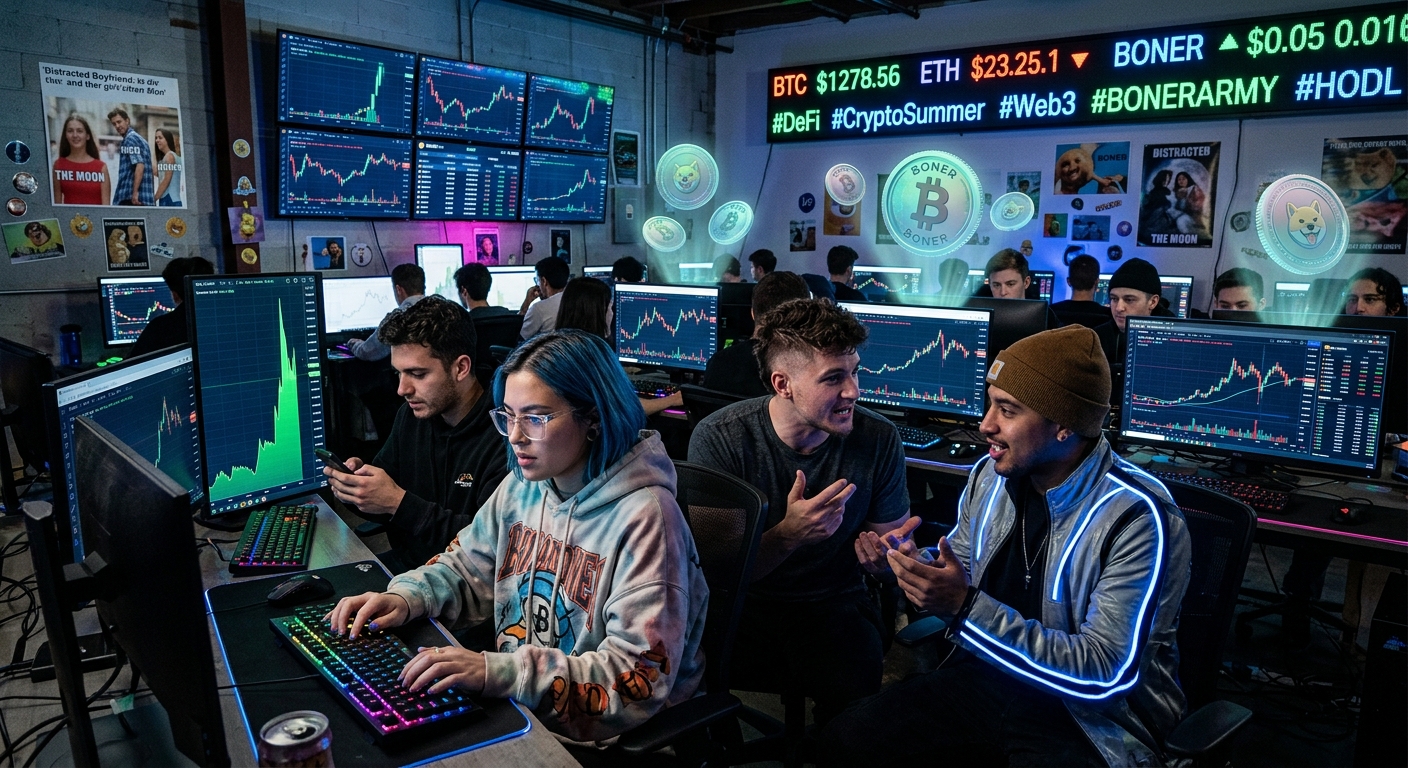
The advent of blockchain technology has ushered in a transformative wave for financial markets, leading to the emergence of innovative trading mechanisms through tokenized assets. The HIMS token, a virtual representation of Hims & Hers shares, showcases this new dimension, allowing users to trade their tokens within digital spaces like Robinhood Chain. This platform has drawn attention not only for its ability to combine conventional assets with cryptocurrencies but also for the bizarre trading pairings it enables, such as the memecoin BONER aligned with HIMS shares.
This peculiar pairing is indicative of broader shifts in how assets are traded and valued in decentralized finance (DeFi). By allowing the HIMS token to be paired with a lighthearted memecoin, the Robinhood Chain illustrates the infinite possibilities that arise when traditional financial products meet disruptive technologies. Such movements not only reflect the whims of market participants but also signal a shift towards a more democratized financial landscape.
The Intricacies of Tokenized Markets
Tokenized stocks, like the HIMS shares, provide opportunities for creativity within DeFi ecosystems. As noted by industry experts, the unusual trading pairs seen on platforms like Robinhood Chain offer an intriguing glimpse into the future of asset trading. Instead of the traditional buy-and-hold strategy, users can engage in decentralized liquidity pools that facilitate trading across various tokens, demonstrating the growing intersection between cryptocurrency and established financial products. The sheer volume of activity generated—over $425 million in trading within 24 hours—highlights the strong demand for these innovative trading mechanisms.
However, the experimentation with liquidity pools raises questions about the stability and reliability of price discovery. The volatility shown in the disconnect between tokenized and traditional stock prices can be attributed to factors like “thin reserves,” creating room for potential market manipulation and unreliable price signals. This scenario poses a dilemma for institutional investors looking to adopt such innovative practices, as highlighted by various market analysts cautioning against purely driving liquidity for speculative assets like memecoins.
Rethinking Market Dynamics
Reflecting on the implications of these developments, it becomes evident that the exploration of tokenized assets is still in its infancy. While the pairing of memecoins with traditional stocks might generate enthusiasm within crypto circles, it also raises important questions about the broader acceptance and integration of onchain financial products in mainstream finance. Experts believe that while these unconventional arrangements may not immediately capture the interest of traditional investors, they do pave the way for future innovations in financial markets.
Moreover, the potential applications of tokenized stocks may extend beyond what’s currently being explored, opening avenues for pairing with other real-world assets, such as commodities or real estate. As noted by analysts, this can lead to an entirely new ecosystem where tokenized equities function as integral components of decentralized finance architecture. However, the path ahead is fraught with challenges; market maturity, regulatory compliance, and institutional trust are pivotal elements that will determine the success of this emerging frontier.
In summary, the rise of tokenized stocks and the perplexing dynamics of trading unconventional pairings highlight the shifting landscape of finance. As we witness these developments unfold, it prompts critical reflection about the future of asset trading. Will institutions gradually embrace tokenized financial products, or will their current skepticism inhibit growth? What mechanisms must evolve to ensure stability and integrity in a world where meme culture and market speculation collide? These questions remain open as the financial world adapts to its next chapter.
Editorial content by Riley Parker
