





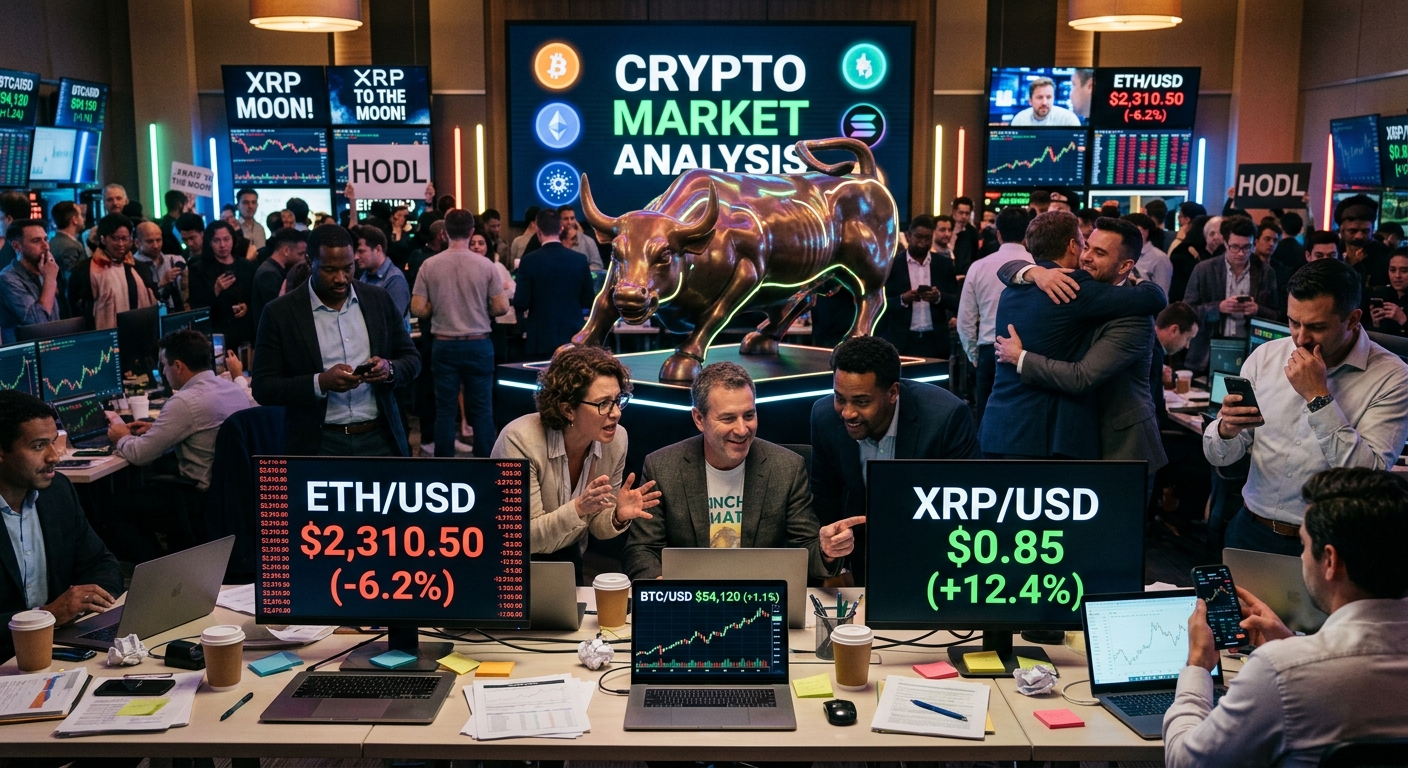

Bitcoin Faces Quantum Threat; Ethereum and XRP Show Market Volatility
- Nearly 10% of Bitcoin supply may be vulnerable to quantum computing advancements.
- Ethereum traders are witnessing bearish trends after a significant price drop.
- XRP has a predicted potential for substantial growth amid “quiet accumulation”.
Introduction: The Evolving Digital Asset Landscape
The cryptocurrency landscape is constantly evolving, shaped by technological advancements and market fluctuations. Recently, concerns have emerged about the potential vulnerability of Bitcoin to quantum computing, a threat that could upend the security of this leading cryptocurrency. According to data analytics platform Glassnode, almost 10% of Bitcoin’s total supply, which amounts to approximately 1.92 million BTC, is classified as “structurally unsafe” in the event that quantum computing breakthroughs materialize. This situation underscores the critical need for the cryptocurrency community to adapt its defenses as technology evolves rapidly.
This rising concern over Bitcoin isn’t isolated, as other major cryptocurrencies are facing their own challenges and opportunities. Ethereum, for instance, experienced a notable price decline, which has raised questions about market control and trader sentiment. Meanwhile, XRP is navigating a phase of quiet accumulation with analysts predicting significant price surges in the future. Understanding these dynamics is crucial for traders, investors, and anyone interested in the future of digital currencies.
The Core Issues: Quantum Vulnerability and Market Reactions
Starting with Bitcoin, the core vulnerability arises from its early output types, such as Satoshi-era Pay-to-Public-Key (P2PK) systems, which disclose public keys openly. This design feature means that if a sufficiently powerful quantum computer were to emerge, it could potentially decode these public keys, thereby compromising the security of almost 1.92 million BTC. The implications are staggering; such a breakthrough could not only affect early adopters of Bitcoin, including the coins held by Bitcoin’s creator, Satoshi Nakamoto, but also challenge the entire ecosystem’s trust in the cryptocurrency’s viability.
On the other hand, Ethereum is facing a decline in price after a brief period of upward momentum. After hitting a local high of $2,420, ETH fell sharply to around $2,131, indicating a shift in market sentiment. Traders are now suggesting that bears are “in control,” as data from exchanges like Binance shows increasing seller volumes. This bearish trend may indicate a broader market correction, prompting investors to reconsider their positions. The significant sell-off raises questions about the sustainability of Ethereum’s market after recent slumps.
Future Implications: Opportunities Amid Challenges
The implications of Bitcoin’s quantum vulnerability could lead to heightened calls for enhanced security measures, such as the development of quantum-resistant blockchain technology. As the cryptocurrency space continues to expand, it becomes apparent that innovation cannot be limited to just financial mechanisms but must also include robust security protocols to withstand future technological challenges.
In the case of XRP, analysts suggest that the current price compression could create substantial opportunities for long-term gains. The projected price targets suggest potential growth of 10x to 15x from existing levels, indicating that smart investors are eyeing the accumulation zone as a low-risk entry point. Grayscale and VanEck’s efforts to push for spot exchange-traded funds (ETFs) further signify a growing institutional interest in cryptocurrencies, presenting potential catalysts for future market movements.
In conclusion, the cryptocurrency market remains a complex interweaving of technological advancements, market sentiment, and investment strategies. As Bitcoin grapples with the potential consequences of quantum advancements, Ethereum navigates bearish trends, and XRP gears up for possible growth, the future of digital currencies remains ripe with uncertainty and opportunity. What measures should be prioritized to secure digital assets against technological threats? How will shifting market dynamics affect investor strategies in the coming months? And finally, could XRP’s anticipated growth create rippling effects across the crypto ecosystem?
Editorial content by Finley Adams
